
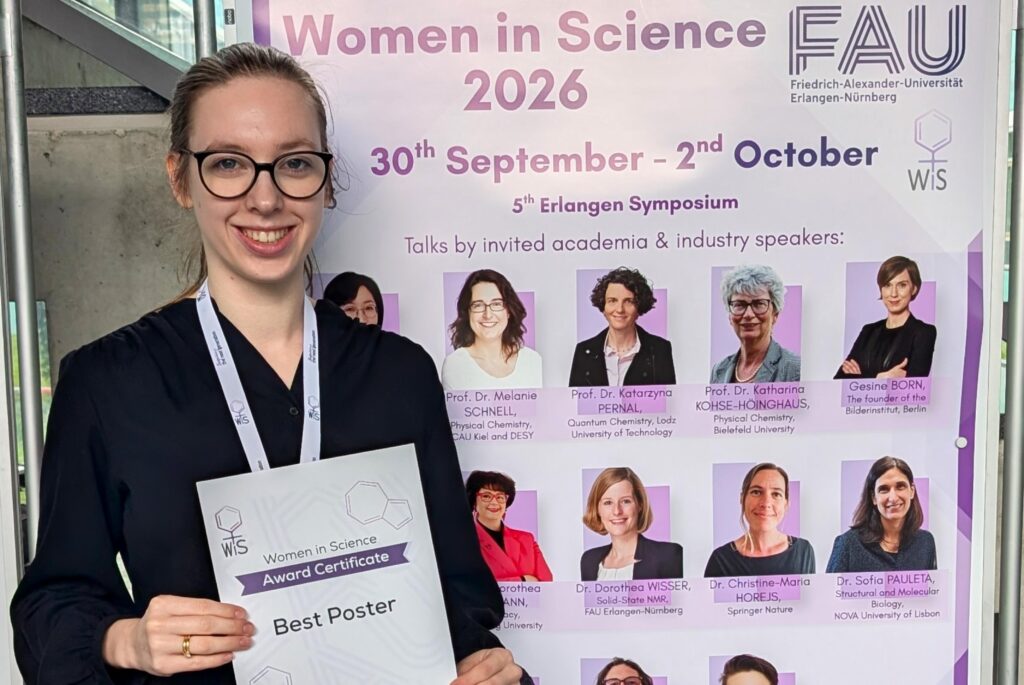
Man or Flatfish? Johanna Fröhlich Wins Best Poster Award at Women in Science Symposium
Man, baby or flatfish? Visitors to Johanna Fröhlich‘s poster at the 5th Women in Science Symposium were shown a photo of a man holding a baby and asked to pick a label. While flatfish may sound like a joke option, Johanna found in her research on explainable artificial intelligence that neural networks confuse men and…Read more
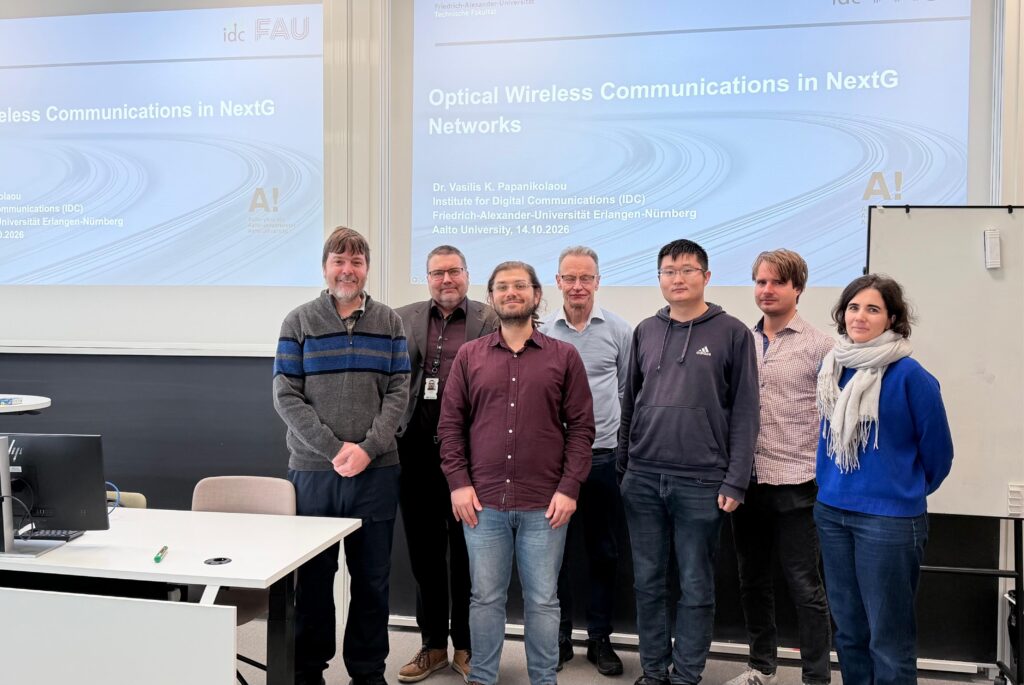
Invited Talk by Vasilis Papanikolaou at Aalto University
On October 14th, IDC member Dr. Vasilis K. Papanikolaou gave an invited talk at Aalto University in Espoo, Finland, upon invitation by Dr. Alexis Dowhuszko from the Department of Information and Communications Engineering. In his talk, titled “Optical Wireless Communications in NextG Networks,” he presented IDC’s recent work on the modeling and design of optical…Read more

Prof. Schober Elected IEEE Division III Director
Prof. Schober was elected as IEEE Division III Director by the more than 40,000 members of the IEEE Communication Society for the term 2028-2029. In 2027, he will serve as IEEE Division III Director-Elect. The Division III Director represents the IEEE Communication Society as a voting member on the IEEE Board of Directors – the principle governing…Read more

Welcome Prof. Dr. Ming Li as Visiting Researcher
We are delighted to welcome Prof. Dr. Ming Li from Dalian University of Technology for a one-month research visit at IDC! Prof. Li’s research interests include integrated sensing and communication (ISAC), reconfigurable intelligent surfaces, and advanced wireless communication technologies. During his stay, he will be hosted by Prof. Dr. Robert Schober at IDC and engage…Read more
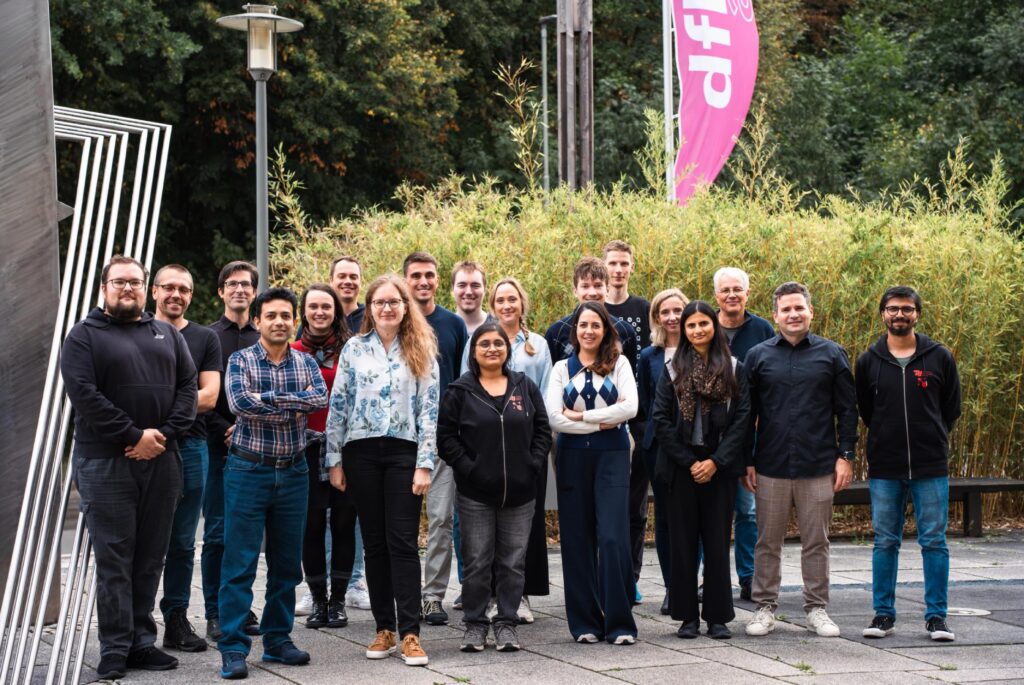
IoBNT Project Meeting at DFKI in Kaiserslautern
The latest project meeting of the Internet of Bio-Nano-Things (IoBNT) consortium took place on October 8–9, 2026, hosted by the German Research Center for Artificial Intelligence (DFKI) in Kaiserslautern. The meeting brought together the project partners to present recent research progress and discuss the next steps towards an integrated communication platform connecting biological systems with…Read more
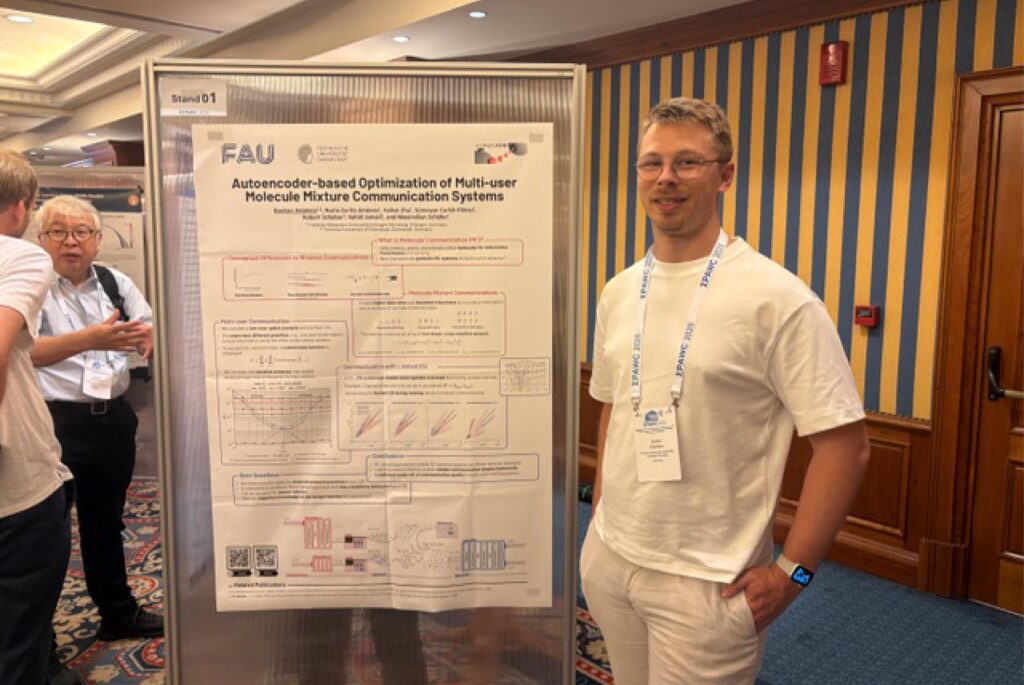
Successful Participation at SPAWC 2026 in Athens
Researchers from IDC successfully showcased their latest work at the 27th International Workshop on Signal Processing and Artificial Intelligence in Wireless Communications, held in Athens, Greece, from September 6-9. IDC was represented by Prof. Wolfgang Gerstacker and Bastian Heinlein, who presented two papers at the workshop: The technical program featured keynotes, invited talks, and several poster…Read more

FAU Ranks #1 in Germany for Telecommunication Engineering
In the 2026 ShanghaiRanking’s Global Ranking of Academic Subjects (GRAS), Telecommunication Engineering at FAU ranks first in Germany and 75th worldwide. This makes Telecommunication Engineering the highest-ranked subject at FAU in this year’s international comparison. More than 2,000 universities from around 100 countries were evaluated in the 2026 ranking. “Telecommunication Engineering” is the subject category…Read more
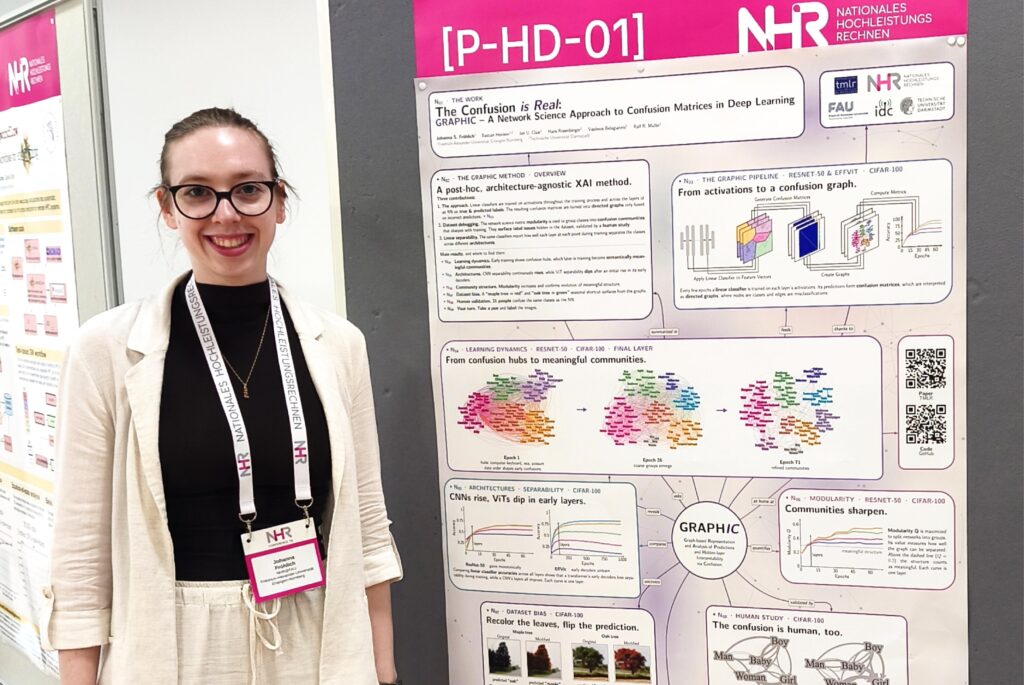
Johanna Fröhlich at NHR Conference 2026 in Paderborn
Johanna Fröhlich represented the IDC at the NHR Conference 2026 in Paderborn, Germany. She presented a poster on her research, titled “The Confusion is Real: GRAPHIC – A Network Science Approach to Confusion Matrices in Deep Learning”. The work presents a new explainable AI (XAI) method for analyzing how neural networks distinguish between classes. The…Read more
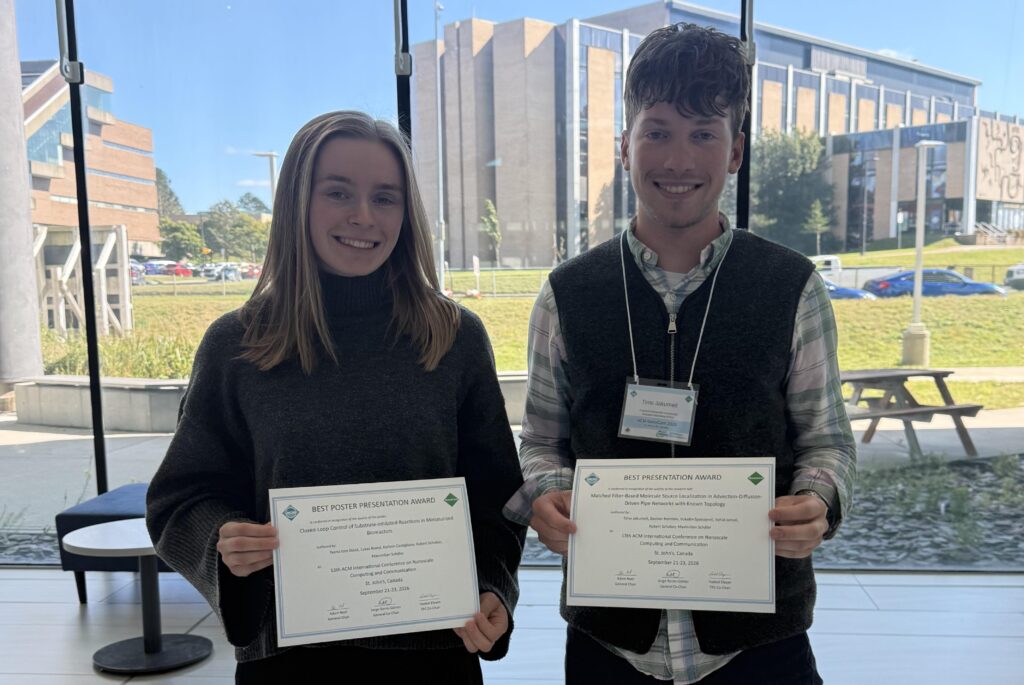
Teena tom Dieck and Timo Jakumeit Win Presentation Awards at NANOCOM 2026
IDC researchers Teena tom Dieck and Timo Jakumeit received two presentation awards at the 13th ACM International Conference on Nanoscale Computing and Communication (ACM NanoCom 2026) in St. John’s, Canada. Teena tom Dieck received the Best Poster Presentation Award for her presentation of “Closed-Loop Control of Substrate-Inhibited Reactions in Miniaturized Bioreactors,” selected from 13 poster…Read more
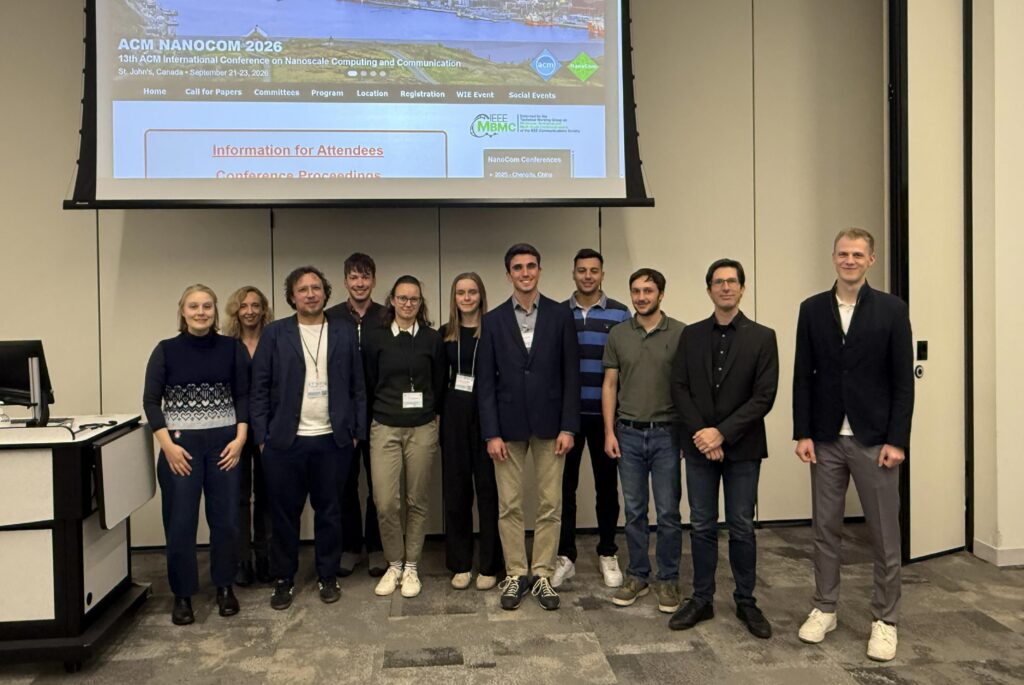
Strong IDC Participation at ACM NANOCOM 2026 in Newfoundland
The IDC was strongly represented at the 13th ACM International Conference on Nanoscale Computing and Communication (ACM NanoCom 2026), held from September 21–23, 2026, at Memorial University in St. John’s, Newfoundland and Labrador, Canada. NanoCom brings together researchers from engineering, computer science, biology, chemistry, physics, and related disciplines to advance computing and communication at the…Read more

Timo Jakumeit Awarded CSIT Travel Grant for ACM NANOCOM 2026
IDC doctoral researcher Timo Jakumeit has been awarded a Student Travel Grant to attend ACM NanoCom 2026 in St. John’s, Canada. The $250 CAD grant is sponsored by the Canadian Society of Information Theory (CSIT) and supports his participation in the conference, where he will present his research on molecule source localization in solute-transporting vessel…Read more
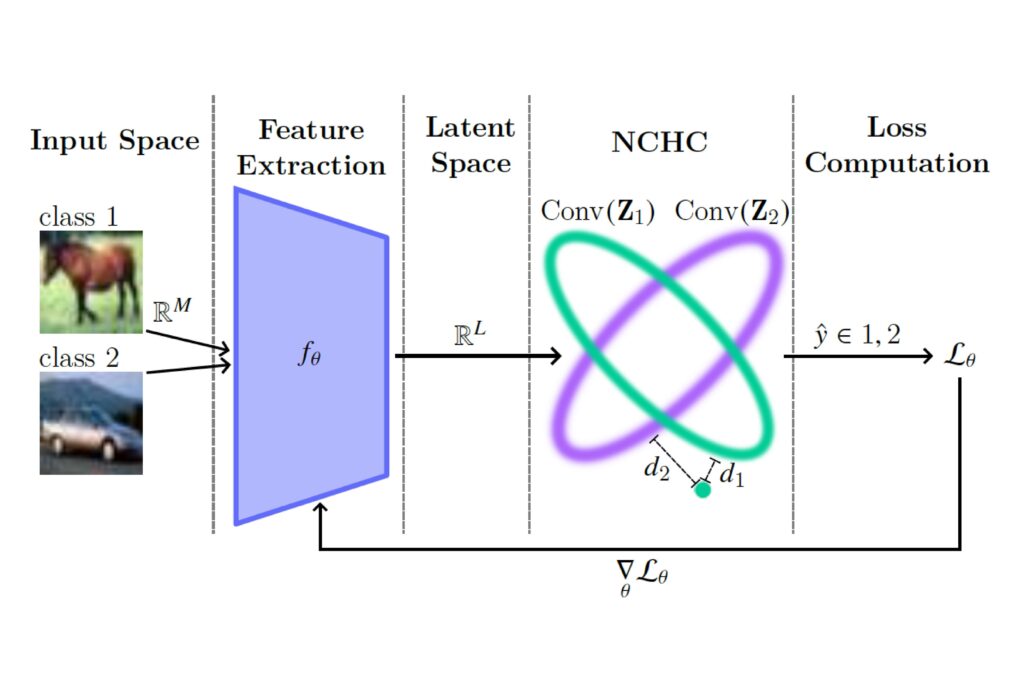
Bachelor Thesis / Research Project / Master Thesis — Empirical Analysis of Convex Separability in Modern Deep Learning Frameworks
Background and Recent Results: Deep learning and specifically neural networks (NNs) have emerged as some of the most powerful algorithms applicable to a wide range of problems. Recent works have investigated the convexity of high-dimensional datasets, both in the input domain, as well as in the latent space of feature extractors. It is found that image datasets such as…Read more
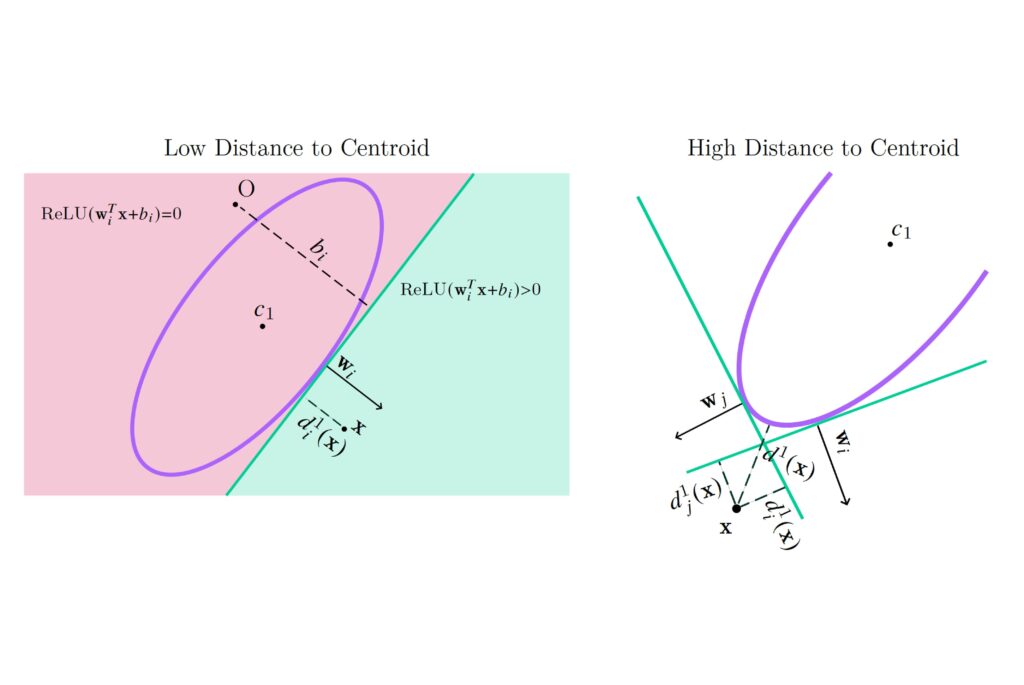
Research Project — Centroid Informed Approximate Nearest Convex Hull Classification
Background and Motivation: Recent work found that certain convex separable problems are hard to learn for multi-layer perceptrons (MLPs) while being solvable with vanishing generalization error by nearest convex hull classification (NCHC). Applying NCHC to a classification task of nn classes requires to solve nn constrained convex optimization problems and is, hence, computationally intractable for real-world…Read more
Prof. Schober Elevated to EURASIP Fellow
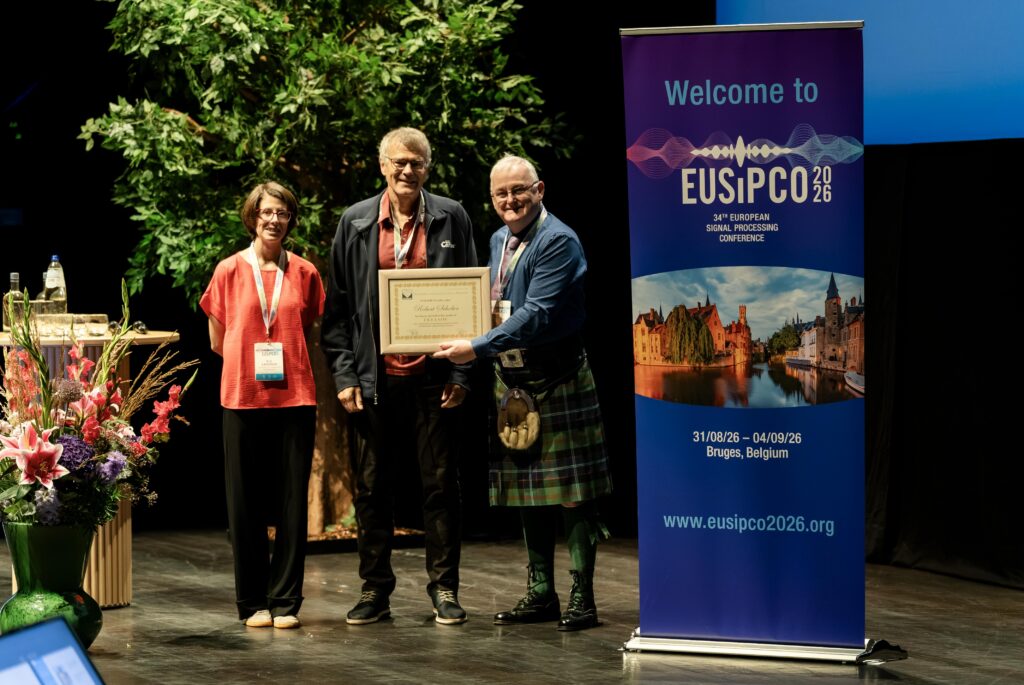
Prof. Schober was elevated to EURASIP Fellow for his “contributions to signal processing for wireless and molecular communication systems”. The European Association for Signal Processing (EURASIP) was founded in 1978 with the purpose / objective of improving communication between groups and individuals that work within the multidisciplinary field of signal processing in Europe and elsewhere,…Read more

Johanna Fröhlich Selected for BayFiD Batch 8
Johanna Fröhlich has been selected for the talent program “BayFiD – Bayerns Frauen in Digitalberufen” initiated by the Bayerisches Staatsministerium für Digitales. BayFiD supports women pursuing careers in digital professions by fostering exchange, networking, and personal development. The initiative brings together talented women from diverse backgrounds in technology and digitalization, providing opportunities to strengthen their…Read more