
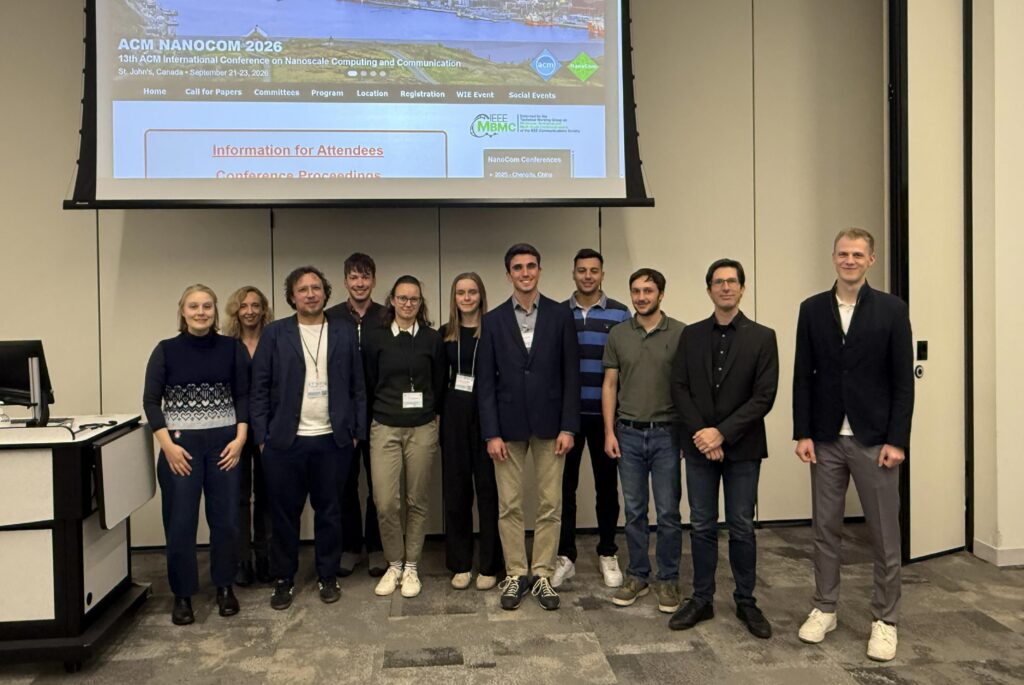
The IDC was strongly represented at the 13th ACM International Conference on Nanoscale Computing and Communication (ACM NanoCom 2026), held from September 21–23, 2026, at Memorial University in St. John’s, Newfoundland and Labrador, Canada. NanoCom brings together researchers from engineering, computer science, biology, chemistry, physics, and related disciplines to advance computing and communication at the micro- and nanoscale, with molecular communication and bio-nanonetworks forming an important part of its interdisciplinary scope.
IDC was represented by Dr.-Ing. Maximilian Schäfer, Johannes Konrad, Timo Jakumeit, Theofilos Symeonidis, and Teena tom Dieck, who contributed several papers and posters to the technical program. In particular, three of the four papers in the conference session on Molecular Communication Modeling involved IDC researchers.
IDC and collaborating FAU researchers contributed to the conference with the following works:
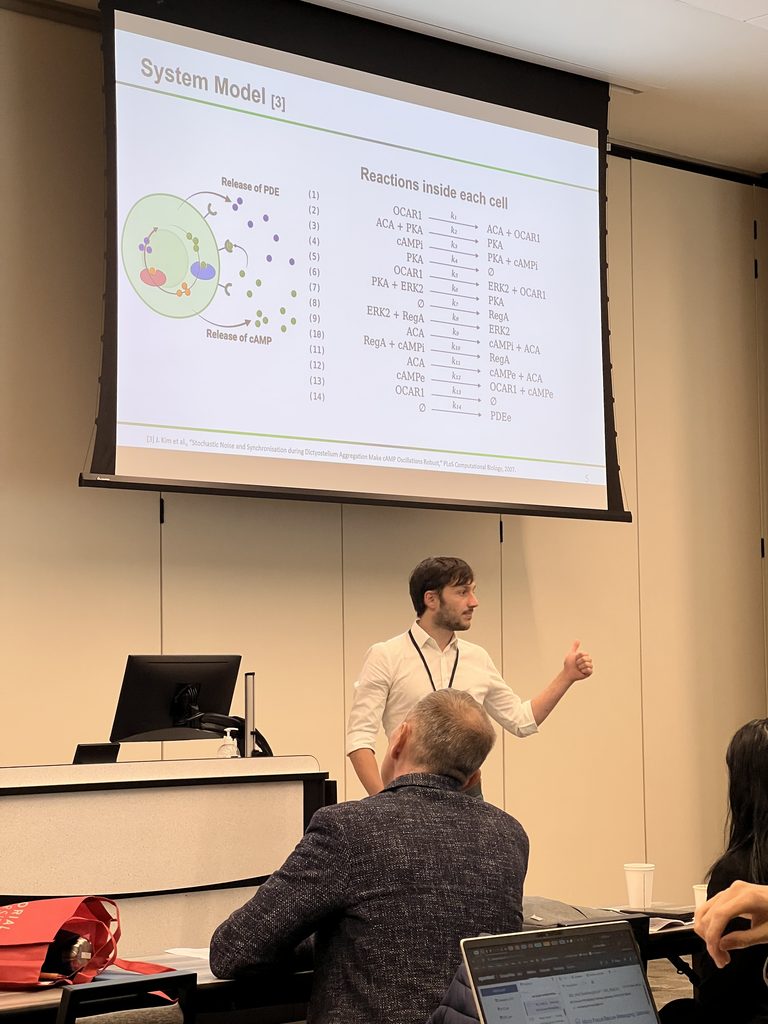
- Regular papers: “On the Role of Relay Cells in Information Propagation Speed for Dictyostelium Chemotaxis: An Agent-Based Modeling Study” by Fardad Vakilipoor, Johannes Konrad, and Maximilian Schäfer; “Analytical Modeling of Dispersive Closed-Loop MC Channels with Pulsatile Flow” by Theofilos Symeonidis and co-authors; and “Matched Filter-Based Molecule Source Localization in Advection-Diffusion-Driven Pipe Networks with Known Topology” by Timo Jakumeit and co-authors.
- Posters and demos: Johannes Konrad presented work on the rate-distortion analysis of collective chemotaxis, while Teena tom Dieck and co-authors contributed “Closed-Loop Control of Substrate-Inhibited Reactions in Miniaturized Bioreactors.” Further FAU contributions came from colleagues in the DFG Research Training Group SyMoCADS, including Paul Wolff and Luiz Wille with “Spatial Modulation in Fluid Flow-Based Molecular Communication,” Lea Erbacher and Silvana Zurmühl with “Driftless pH Detection in Polymersomes via Responsive Peptides,” and Luiz Wille with “Connecting the Lines: Particle Branching in Channel Networks in Molecular Communication.” An additional FAU contribution by Keyu Xiao investigated the numerical estimation of SPION wall-adhesion layers.
Beyond the scientific contributions, Maximilian Schäfer served as Workshops and Tutorials Chair of ACM NanoCom 2026 and chaired the technical session on Nano-EM & THz Systems, contributing to the organization of the conference program.
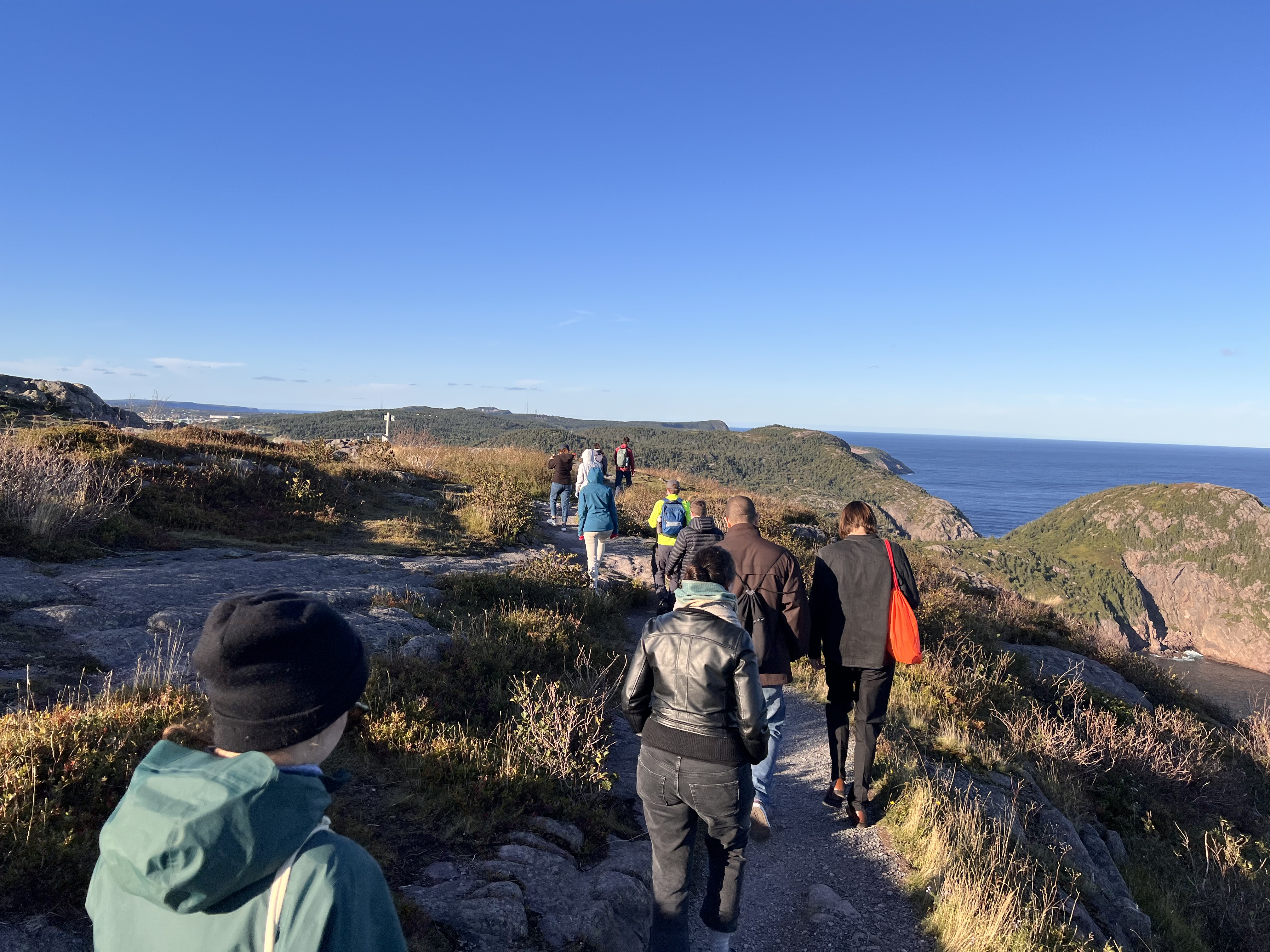
The technical program featured keynote and invited talks, tutorials, four technical sessions, a dedicated poster and demo session, networking activities, and a Women in Engineering event, where Prof. Kathrin Castiglione from FAU’s Institute for Bioprocess Engineering presented an overview of her group’s work on molecular communication. The scientific program was complemented by several opportunities for informal exchange, including a welcome reception, a conference banquet, and an optional closing-day excursion.

 4/12
4/12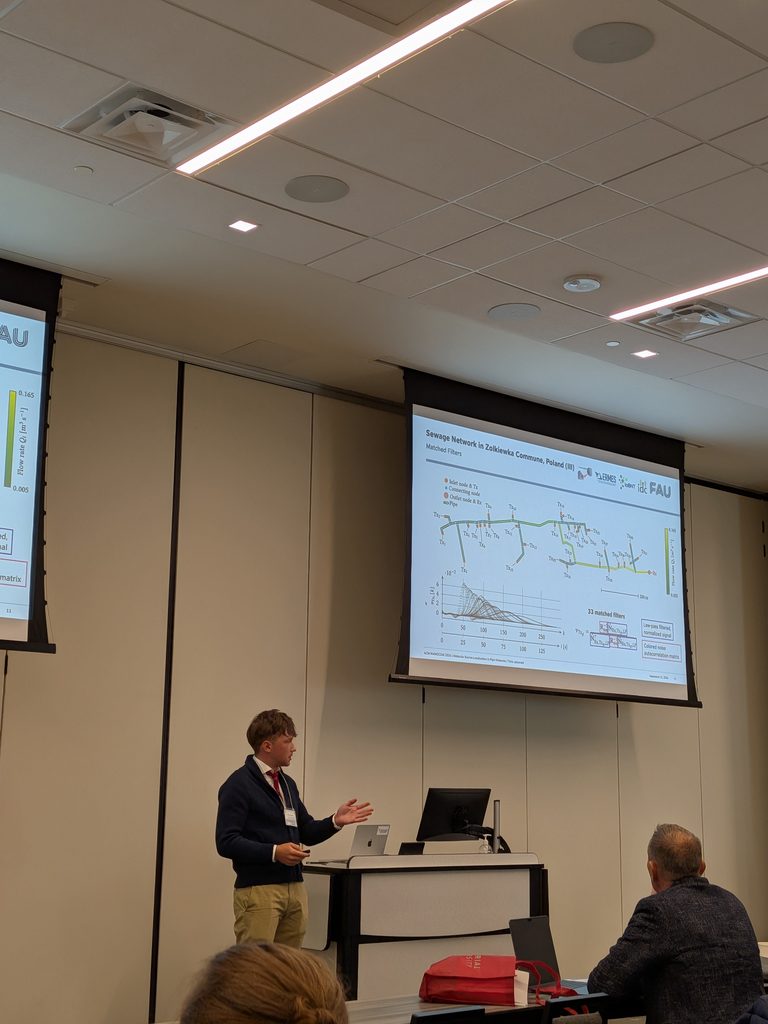
 6/12
6/12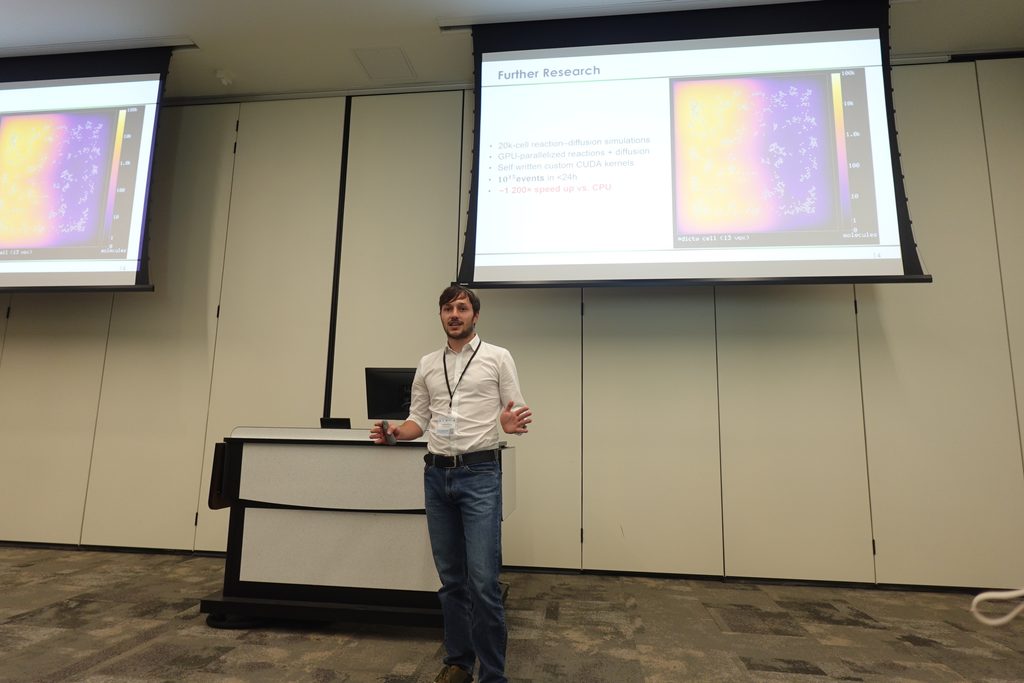 7/12
7/12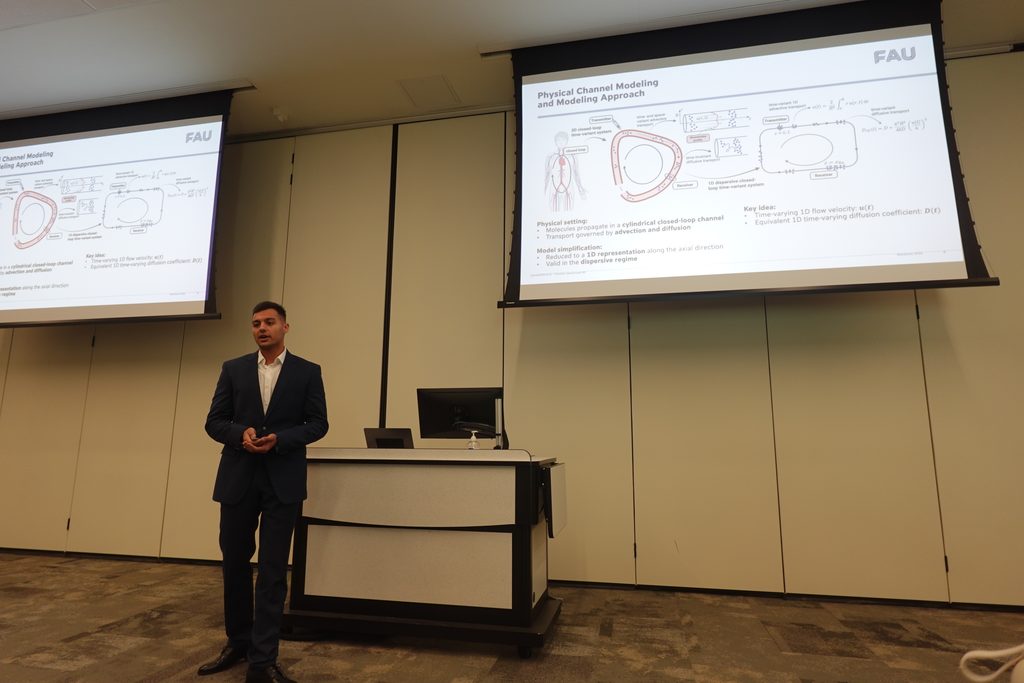 8/12
8/12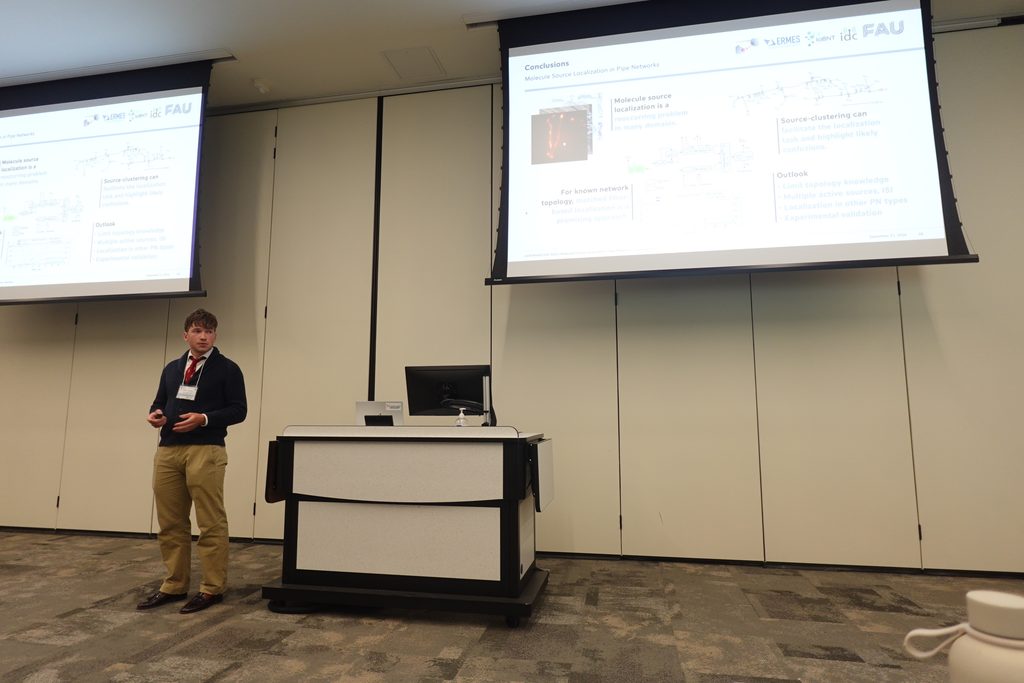 9/12
9/12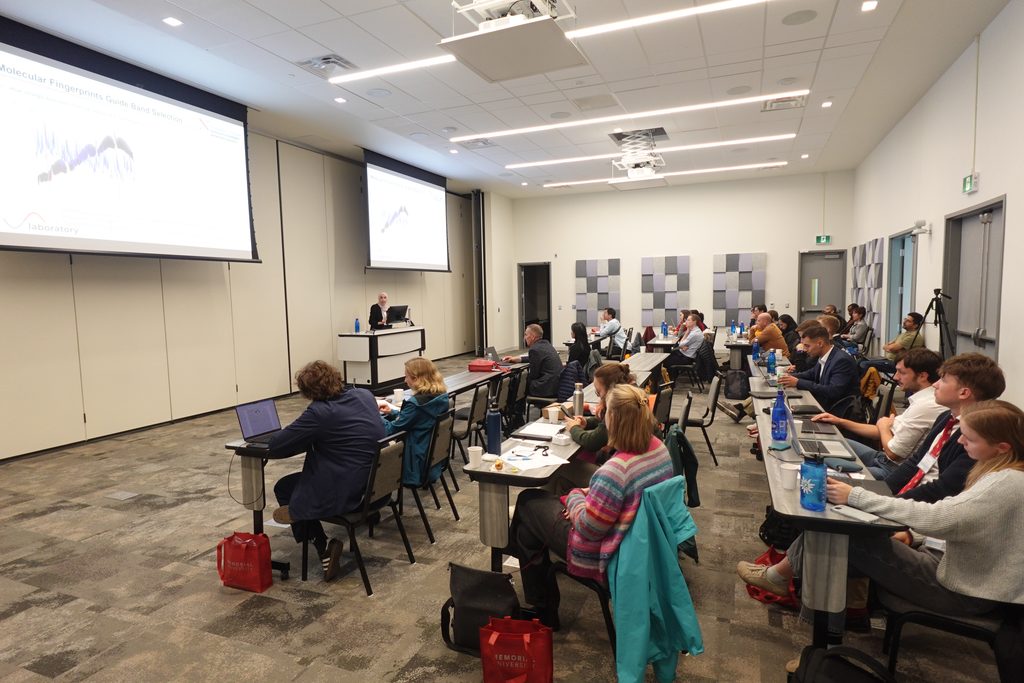 10/12
10/12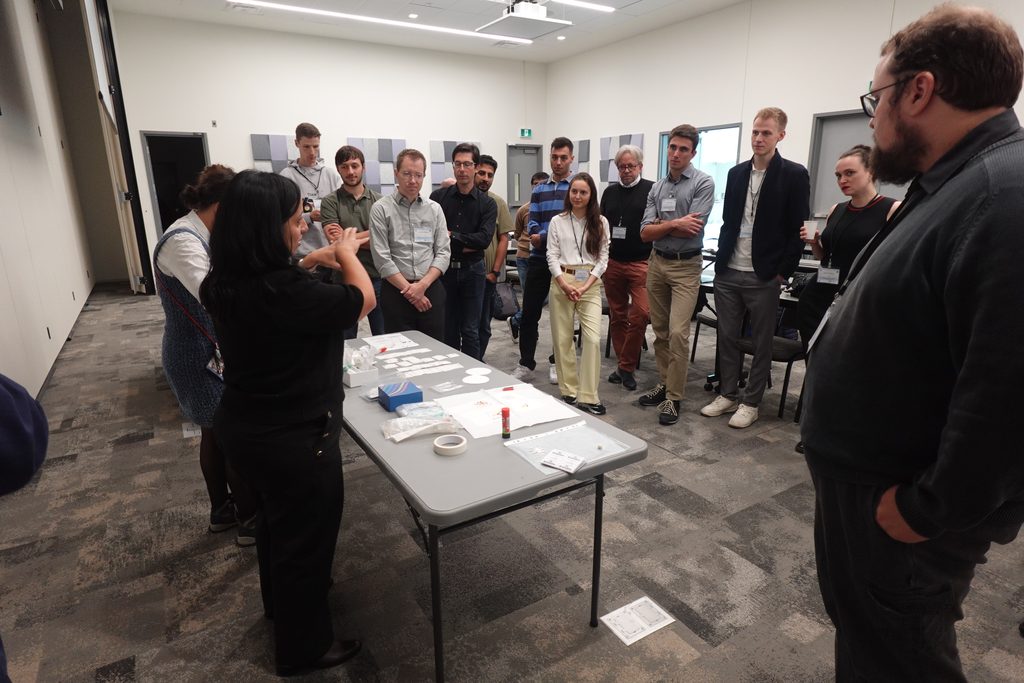 11/12
11/12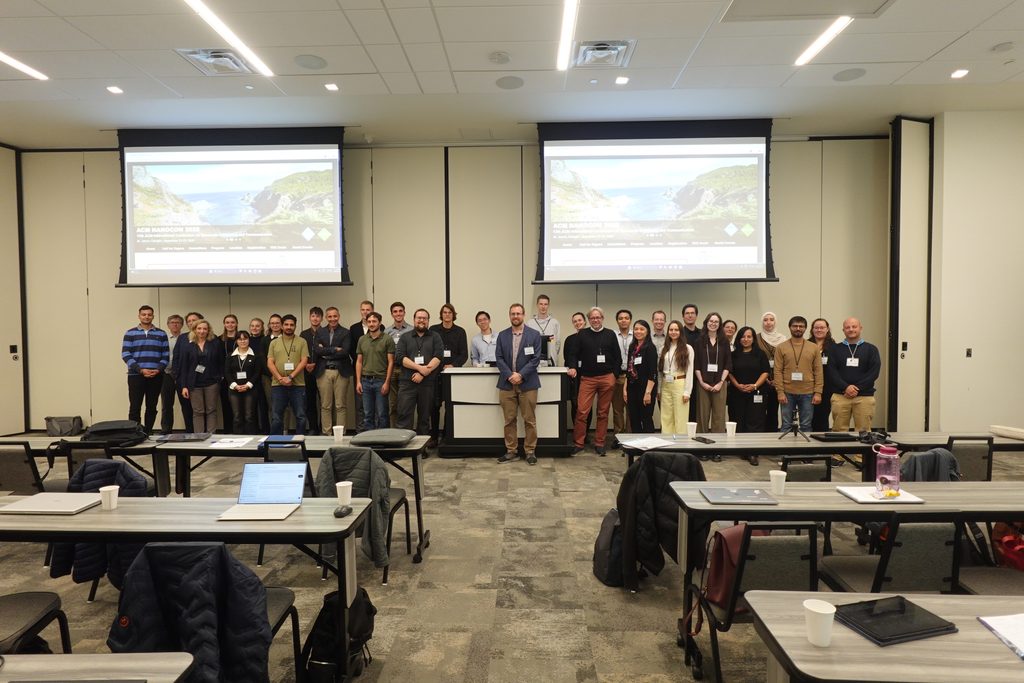 12/12
12/12